
Consciousness is the most intimate fact and one of the least understood. Colors appear, pain hurts, thoughts have content, and a point of view accompanies waking life. Physical descriptions of neurons and behavior do not obviously convey what red looks like or grief feels like. The explanatory gap tempts a direct conclusion: matter cannot produce mind, so consciousness must be an immaterial soul, and souls point to God.
The first premise captures a real problem. David Chalmers distinguishes the “easy” problems of explaining cognitive functions from the hard problem of explaining why physical processing is accompanied by subjective experience at all. [49] “Easy” is relative; perception, memory, and attention are scientifically difficult. They are called easy because functional mechanisms seem in principle suited to explain them. Why those mechanisms feel like anything remains disputed.
Physicalism is the view, roughly, that everything is physical or depends wholly on the physical. Daniel Stoljar's survey of the position shows that even formulating it precisely is difficult. [50] What counts as physical may change with science, and relations such as identity, realization, and supervenience need clarification. Atheism does not logically entail physicalism. An atheist could accept property dualism, panpsychism, neutral monism, or other views while denying gods.
This logical space matters. If materialism failed, theism would not win automatically. The conclusion “consciousness is not reducible to present physics” differs greatly from “each person is an immortal substance created by the Christian God.” Additional premises would be needed to identify a soul, preserve personal identity after brain death, connect souls to moral judgment, and establish a divine creator.
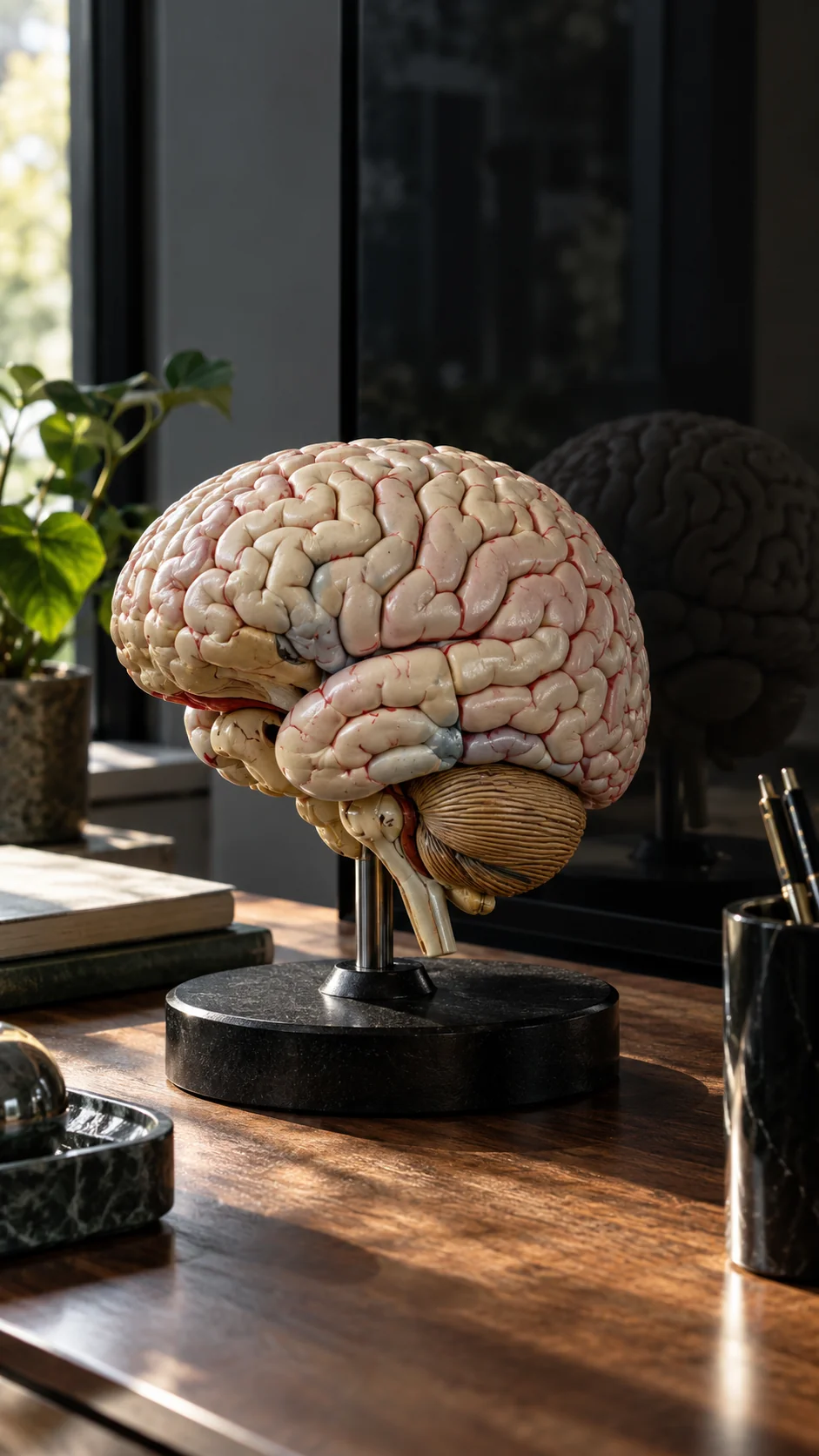
Evidence nevertheless ties the mind closely to the brain. Injury can alter language, impulse control, memory, recognition, mood, and personality. Anesthesia can remove ordinary awareness in a dose-dependent way. Psychoactive chemicals alter perception and selfhood. Dementia can dismantle capacities that families recognize as central to a person. Childhood brain development accompanies developing cognition, and sleep changes the structure of experience. Patricia Churchland uses such evidence to argue for a deeply biological understanding of mind. [51]
These correlations do not deductively prove identity. A dualist can compare the brain with a radio: damaging the receiver distorts a signal without damaging its distant source. The analogy preserves possibility but generates questions. We have independent evidence for broadcast signals and can detect them apart from a particular radio. We lack comparable evidence for a mind-signal existing independently of brains. Further, brain changes alter highly specific aspects of mind in systematic ways, as expected if brain activity realizes those aspects.
The receiver model also leaves the soul strangely incomplete. If memory, temperament, judgment, language, emotional regulation, and perception all depend on neural structures, what psychologically rich person remains when those structures fail? Saying that all capacities are restored after death introduces a divine reconstruction rather than evidence for a naturally separable self.
Substance dualism treats mind and body as different kinds of entity. It respects the apparent difference between subjective experience and extended matter. It also faces interaction problems. If an immaterial mind causes a hand to move, where and how does it alter the physical process? If physical events are already causally sufficient under physical laws, the mental cause appears redundant. If they are not, measurable gaps might be expected. Dualists have responses, but naming a soul does not by itself explain the mechanism.
Personal identity creates another difficulty. Bodies and brains change, yet a person persists. The soul can seem like a simple bearer of identity. But if souls have no observable features, what makes one soul one person’s rather than another's? Memory, character, relationships, and bodily continuity do most of the practical work of identifying a person. A bare metaphysical point does not preserve what loved ones hope to meet again.
Some philosophers locate identity in psychological continuity rather than an indivisible substance. Others emphasize the living organism or deny that identity must be perfectly determinate in every case. These views can feel less comforting, but they address familiar facts: amnesia, split-brain phenomena, gradual personality change, and the dependence of agency on development. The concept of a soul can postpone rather than solve those puzzles.
Near-death experiences are often presented as direct evidence that consciousness leaves the brain. Reports include tunnels, light, deceased relatives, panoramic memory, peace, or a view from outside the body. The experiences can be profound and sometimes transform values. Their interpretation remains contested. Physiological stress, drugs, sleep-like processes, memory construction, expectation, and later retelling provide plausible contributors. Reports vary across individuals and cultures.
The disputed claim is whether accurate information was acquired while normal sensory and brain function could not support it; vivid near-death experiences by themselves do not establish that conclusion. Such cases require precise timing, medical records, controlled targets, independent corroboration, and protection against information learned before or after the event. Anecdotes rarely provide all these controls. Cardiac arrest also does not mean every brain process instantly ceases, and retrospective reports cannot by themselves locate each experience within the period of lowest function.
Even a verified out-of-body perception would establish an anomaly before it established Christian survival. Researchers would need to replicate it and determine what kind of information transfer occurred. Moving directly from anomaly to heaven repeats the gap reasoning seen in cosmology and design.
Contemporary neuroscience builds models of conscious perception rather than waiting for a complete metaphysics. Anil Seth has developed an account connecting conscious presence and selfhood with predictive processing and the brain's regulation of the body. [59] Other theories emphasize global availability, recurrent processing, higher-order representation, or integrated information. These programs disagree, and none has closed the hard problem. Their progress lies in linking features of experience to testable mechanisms.
An incomplete science is not a failed naturalism. Before genetics, inheritance was real but poorly understood. Before germ theory, disease mechanisms were obscure. The responsible stance toward an unsolved problem is calibrated uncertainty. We can say that consciousness strongly depends on brains, that no separable soul has been publicly detected, and that the ultimate relation between experience and physical reality remains open.
Theism does not make consciousness transparent. Saying that God is an infinite mind may intensify the mystery. Human minds are known in association with bodies, development, sensory systems, and changing neural states. A disembodied mind with unlimited knowledge has none of those familiar supports. If finite consciousness is hard to derive from matter, infinite consciousness is not automatically easier to accept as an unexplained starting point.
The claim that a divine mind designed human minds also faces the problem of their defects. Perception is selective. Memory is reconstructive. Reasoning is biased. Mental illness can produce delusion, despair, and unbearable distress. The dependence of personality on injury sits awkwardly beside the idea of a soul equipped for rational relationship with God. Evolution expects cognition that is effective enough for survival, socially shaped, and vulnerable to tradeoffs.
Theist Alvin Plantinga has argued that naturalism and evolution may undermine trust in our cognitive faculties because evolution selects behavior rather than true belief. [7] The argument is important but not fatal. Accurate representation often helps flexible organisms navigate a complex environment. False beliefs can sometimes support adaptive behavior, yet systematically unreliable cognition would struggle with predators, tools, alliances, and prediction. Science also develops social methods, measurement, replication, and criticism specifically to correct individual limits.
The skeptical force rebounds. If humans are fallen creatures with corrupted reason, confidence in theology also requires a reliability account. If God designed cognition, widespread religious disagreement and cognitive disorder need explanation. Neither worldview gets certainty for free. The comparative question is which account better fits useful but imperfect minds embedded in biological history.
Free will is sometimes tied to the soul. If every mental event depends on physical causes, critics say, no one truly chooses. The issue is not unique to atheism. Divine foreknowledge, providence, and creation raise their own questions about alternatives and responsibility. Secular philosophers defend both compatibilist freedom, understood as action flowing from reasons and character without coercion, and libertarian freedom not fully determined by prior states. Invoking an immaterial cause does not automatically create control; a random or unexplained soul event would not be more responsible.
Agency can be real at the level of persons even when implemented by biology. A person weighs reasons, anticipates consequences, inhibits impulses, and responds to criticism. These capacities vary with health and circumstance, which is why responsibility is graded in law and ethics. A naturalistic account can support accountability while recognizing luck and encouraging rehabilitation rather than pure retribution.
What, then, should an atheist say about death? The best-supported expectation is that personal consciousness ends when the organized brain irreversibly ceases to function. This is an inference from dependence, not an observation of every possible postmortem state. It could be wrong. Evidence for survival would be philosophically and personally momentous. At present, reports and arguments do not overcome the continuous connection between mind and living brain.
Humility here should be symmetrical. Atheists should not claim that neuroscience has explained why consciousness exists when it has not. Theists should not present the explanatory gap as evidence already labeled “soul.” Mystery belongs to neither side. It is a description of our current position.
Consciousness may eventually require a revision of physical theory or metaphysical categories. Such a revision could be surprising. It would still need to earn every religious conclusion separately. Until then, the brain-based pattern, the absence of independently verified disembodied minds, and the limited explanatory value of a soul give reasonable support to naturalism. We are embodied creatures whose inner lives are astonishing, fragile, and dependent on the organs that sustain them.